Okay, here’s a comprehensive article about Software as a Service (SaaS) examples, covering various categories and highlighting key benefits. I’ve aimed for around 1200 words.
Software as a Service (SaaS) Examples: A Deep Dive into Cloud-Based Solutions
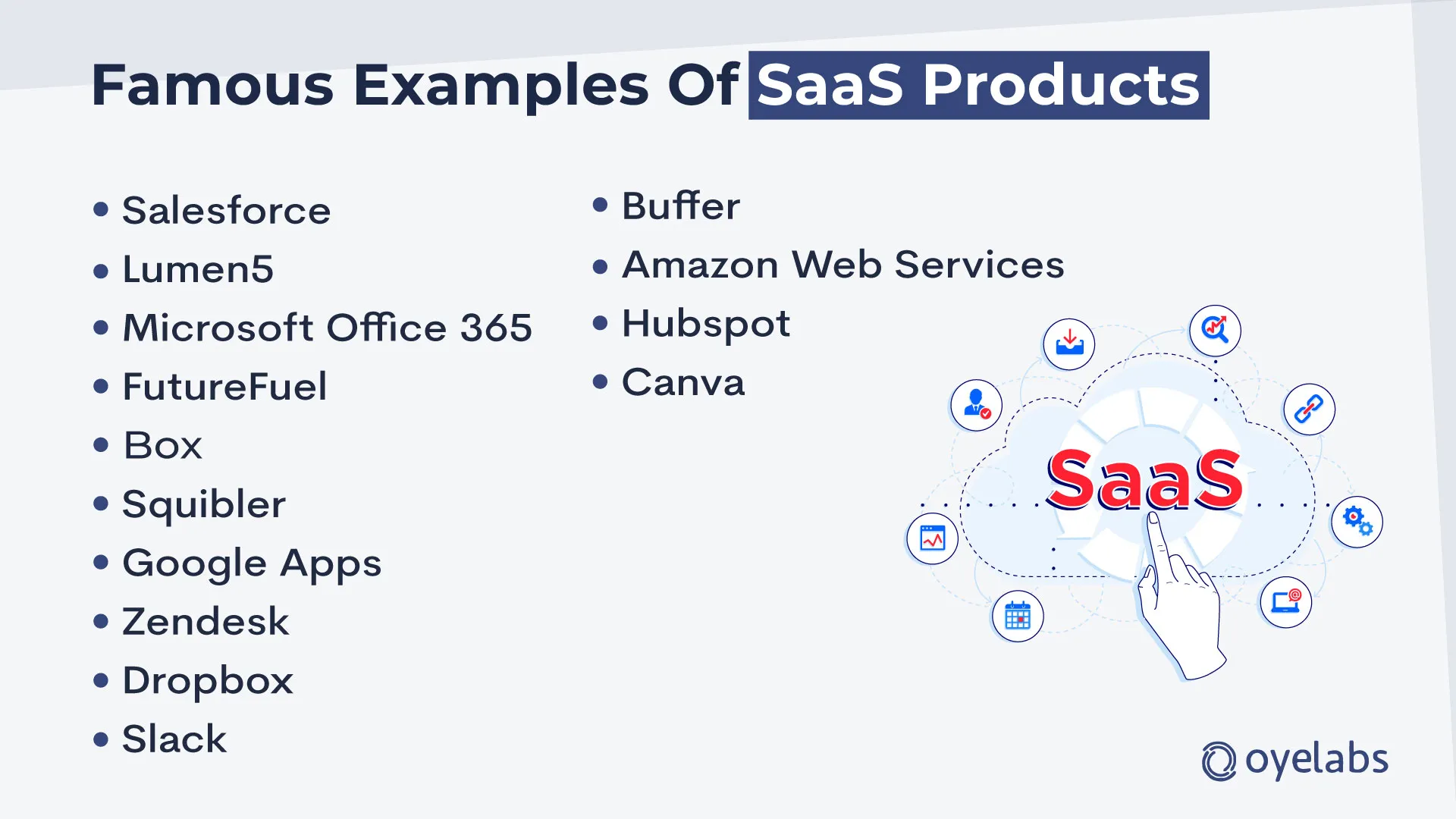
In today’s rapidly evolving digital landscape, businesses are increasingly adopting cloud-based solutions to streamline operations, enhance collaboration, and reduce costs. Software as a Service (SaaS) has emerged as a dominant model, offering a flexible and scalable way to access and utilize software applications over the internet. Instead of installing and maintaining software on local servers, users can subscribe to SaaS applications and access them from virtually any device with an internet connection. This article will explore a diverse range of SaaS examples across various industries, highlighting the benefits and illustrating the widespread adoption of this transformative technology.
What is SaaS? A Quick Recap
Before delving into specific examples, let’s quickly recap the core concept of SaaS. SaaS is a software distribution model where a third-party provider hosts applications and makes them available to customers over the internet. Users pay a subscription fee, typically monthly or annually, to access the software. The provider handles all the underlying infrastructure, including servers, databases, and security, freeing up businesses from the burden of managing complex IT systems.
Key Benefits of SaaS:
- Cost Savings: Reduced upfront investment, lower IT maintenance costs, and predictable subscription fees.
- Scalability and Flexibility: Easily scale resources up or down based on changing business needs.
- Accessibility: Access software from anywhere with an internet connection.
- Automatic Updates: The provider handles all software updates and patches.
- Collaboration: Facilitates seamless collaboration among teams, regardless of location.
- Faster Deployment: Quicker setup and implementation compared to traditional software.
- Focus on Core Business: Allows businesses to focus on their core competencies rather than IT infrastructure.
SaaS Examples Across Different Categories:
SaaS solutions span a wide array of categories, addressing diverse business needs. Here’s a look at some prominent examples:
1. Customer Relationship Management (CRM):
- Salesforce: The undisputed leader in the CRM space, Salesforce offers a comprehensive suite of tools for sales, marketing, customer service, and analytics. It helps businesses manage customer interactions, track leads, automate sales processes, and gain valuable insights into customer behavior. Salesforce’s extensive ecosystem of apps and integrations makes it highly customizable to meet specific business requirements.
- HubSpot CRM: A popular choice for small to medium-sized businesses, HubSpot CRM provides a user-friendly interface and a range of free and paid features. It focuses on inbound marketing, helping businesses attract, engage, and delight customers. HubSpot CRM offers tools for contact management, lead tracking, email marketing, and reporting.
- Zoho CRM: Zoho CRM is a cost-effective CRM solution that offers a wide range of features for sales, marketing, and customer support. It integrates seamlessly with other Zoho applications, providing a unified platform for business operations. Zoho CRM is known for its customization options and its ability to cater to businesses of all sizes.
2. Enterprise Resource Planning (ERP):
- NetSuite: A comprehensive ERP suite, NetSuite offers a unified platform for managing financials, supply chain, inventory, order management, and customer relationship management. It provides real-time visibility into key business metrics, enabling businesses to make informed decisions. NetSuite is particularly well-suited for mid-sized to large enterprises.
- SAP S/4HANA Cloud: SAP’s cloud-based ERP solution, S/4HANA Cloud, offers a modern and intelligent platform for managing business processes. It leverages advanced technologies such as machine learning and artificial intelligence to automate tasks, improve efficiency, and drive innovation.
- Microsoft Dynamics 365: Dynamics 365 is a suite of business applications that includes ERP and CRM functionalities. It offers a modular approach, allowing businesses to choose the specific applications they need. Dynamics 365 integrates seamlessly with other Microsoft products, such as Office 365 and Power BI.
3. Collaboration and Communication:
- Microsoft Teams: A leading collaboration platform, Microsoft Teams provides tools for chat, video conferencing, file sharing, and project management. It integrates seamlessly with other Microsoft applications, making it a central hub for team communication and collaboration.
- Slack: A popular messaging app for teams, Slack offers channels for organizing conversations, direct messaging, file sharing, and integrations with other tools. It’s known for its user-friendly interface and its ability to improve team communication and productivity.
- Zoom: A widely used video conferencing platform, Zoom provides high-quality video and audio, screen sharing, and recording capabilities. It’s ideal for meetings, webinars, and online training sessions.
4. Project Management:
- Asana: A project management tool that helps teams organize, track, and manage their work. Asana offers features for task management, project planning, collaboration, and reporting. It’s known for its user-friendly interface and its ability to improve team productivity.
- Trello: A visual project management tool that uses boards, lists, and cards to organize tasks. Trello is easy to use and highly customizable, making it a popular choice for teams of all sizes.
- Monday.com: A work operating system that allows teams to plan, track, and manage projects, workflows, and processes. It offers a visual and intuitive interface, customizable templates, and integrations with other tools.
5. Human Resources (HR):
- Workday: A comprehensive HR management system that offers features for human capital management, talent management, and payroll. Workday is designed for large enterprises and provides a unified platform for managing the entire employee lifecycle.
- BambooHR: An HR software solution designed for small and medium-sized businesses. BambooHR offers features for employee onboarding, performance management, time tracking, and benefits administration.
- Zenefits: A cloud-based HR platform that offers features for payroll, benefits administration, time tracking, and compliance. Zenefits is designed for small businesses and aims to simplify HR processes.
6. Marketing Automation:
- Marketo: A marketing automation platform that helps businesses automate marketing campaigns, generate leads, and nurture prospects. Marketo offers features for email marketing, lead scoring, website personalization, and analytics.
- Pardot (Salesforce Marketing Cloud Account Engagement): A B2B marketing automation platform that helps businesses generate leads, nurture prospects, and close deals. Pardot offers features for email marketing, lead scoring, website tracking, and CRM integration.
- Mailchimp: An email marketing platform that helps businesses create and send email campaigns, manage subscribers, and track results. Mailchimp is a popular choice for small businesses and offers a range of features for email marketing automation.
7. E-commerce Platforms:
- Shopify: A popular e-commerce platform that allows businesses to create and manage online stores. Shopify offers features for product management, order processing, payment processing, and shipping.
- BigCommerce: An e-commerce platform that provides a scalable and customizable solution for online businesses. BigCommerce offers features for product management, order management, marketing, and SEO.
The Future of SaaS:
SaaS is expected to continue its growth trajectory in the coming years. As businesses increasingly embrace cloud computing, SaaS will become even more integral to their operations. Emerging trends such as artificial intelligence (AI), machine learning (ML), and the Internet of Things (IoT) are further driving the adoption of SaaS solutions. We can expect to see more specialized SaaS applications tailored to specific industries and business functions. The future of software is undoubtedly in the cloud, and SaaS will continue to be a driving force behind this transformation.
Conclusion:
The examples discussed above represent just a fraction of the vast landscape of SaaS solutions available today. From CRM and ERP to collaboration and marketing automation, SaaS is transforming the way businesses operate and innovate. By embracing SaaS, organizations can unlock significant cost savings, improve efficiency, and gain a competitive edge in today’s dynamic market. As technology continues to evolve, SaaS will undoubtedly play an even more crucial role in shaping the future of business.