ERP vs. CRM: A Comprehensive Comparison for Business Growth
In today’s competitive business landscape, efficiency and customer satisfaction are paramount. Many organizations turn to software solutions to streamline processes and enhance relationships. Two of the most common and powerful tools are Enterprise Resource Planning (ERP) and Customer Relationship Management (CRM) systems. While both are designed to improve business performance, they serve distinct purposes and cater to different areas of an organization. This article will delve into a detailed comparison of ERP and CRM software, exploring their features, benefits, key differences, and how to determine which one is right for your specific needs.
What is ERP Software?
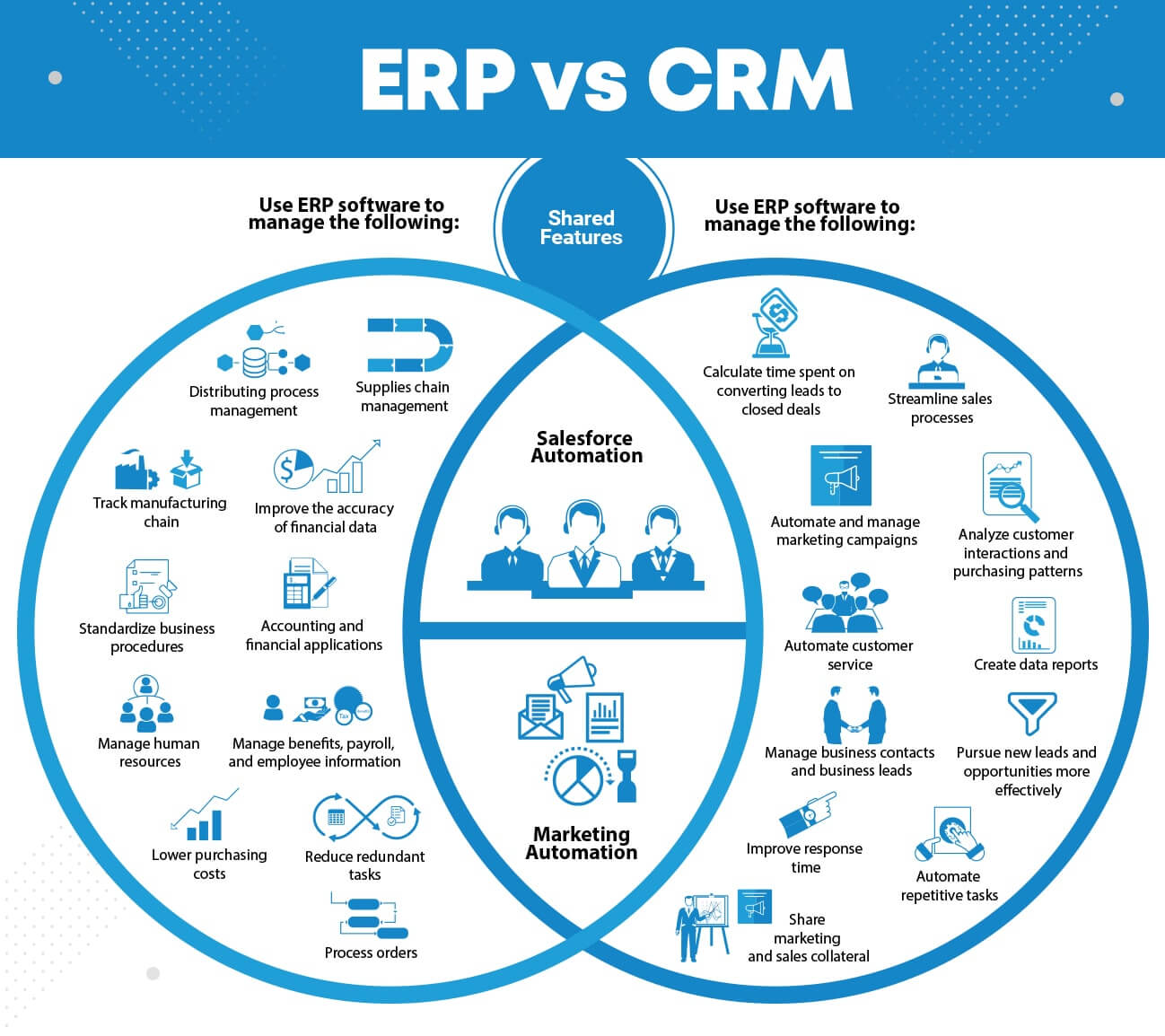
ERP software is an integrated suite of applications that manages and automates a wide range of internal business processes. It acts as a central nervous system for an organization, connecting various departments and functions into a unified system. The primary goal of ERP is to create a single source of truth for data, improve operational efficiency, and provide real-time visibility into the business.
Key Features of ERP:
- Financial Management: Automates accounting processes, including general ledger, accounts payable, accounts receivable, budgeting, and financial reporting.
- Supply Chain Management: Manages the flow of goods and materials from suppliers to customers, including procurement, inventory management, production planning, and logistics.
- Manufacturing: Supports production processes, including bill of materials (BOM) management, shop floor control, quality control, and capacity planning.
- Human Resources: Manages employee data, payroll, benefits, time and attendance, and talent management.
- Customer Relationship Management (CRM): Some ERP systems include CRM modules to manage sales, marketing, and customer service activities.
- Project Management: Facilitates planning, scheduling, resource allocation, and tracking of projects.
- Business Intelligence: Provides tools for data analysis, reporting, and dashboards to gain insights into business performance.
Benefits of ERP:
- Improved Efficiency: Automates tasks, reduces manual processes, and streamlines workflows.
- Better Decision-Making: Provides real-time data and insights to support informed decisions.
- Reduced Costs: Optimizes resource utilization, minimizes waste, and improves inventory management.
- Enhanced Collaboration: Facilitates communication and collaboration between departments.
- Increased Productivity: Empowers employees with the tools and information they need to perform their jobs effectively.
- Compliance: Helps organizations comply with regulatory requirements and industry standards.
- Scalability: Adapts to the changing needs of the business as it grows.
What is CRM Software?
CRM software is a system designed to manage and improve customer relationships. It focuses on organizing, automating, and synchronizing sales, marketing, customer service, and technical support. CRM helps businesses understand their customers better, personalize interactions, and build long-term loyalty.
Key Features of CRM:
- Contact Management: Stores and organizes customer data, including contact information, communication history, and purchase history.
- Sales Force Automation: Automates sales processes, such as lead management, opportunity tracking, and sales forecasting.
- Marketing Automation: Automates marketing campaigns, such as email marketing, social media marketing, and lead nurturing.
- Customer Service: Manages customer inquiries, support tickets, and service requests.
- Analytics and Reporting: Provides insights into customer behavior, sales performance, and marketing effectiveness.
- Integration: Integrates with other business systems, such as ERP, email, and social media platforms.
Benefits of CRM:
- Improved Customer Satisfaction: Provides personalized service and support to meet customer needs.
- Increased Sales: Generates more leads, closes more deals, and increases customer lifetime value.
- Enhanced Marketing Effectiveness: Targets marketing campaigns to the right audience and measures results.
- Better Customer Retention: Builds stronger relationships with customers and reduces churn.
- Improved Collaboration: Facilitates communication and collaboration between sales, marketing, and customer service teams.
- Data-Driven Insights: Provides insights into customer behavior and preferences to improve business decisions.
- Streamlined Communication: Centralizes customer interactions and ensures consistent messaging.
Key Differences Between ERP and CRM:
While both ERP and CRM systems aim to improve business performance, they have distinct focuses and functionalities. Here’s a table summarizing the key differences:
| Feature | ERP | CRM |
|---|---|---|
| Focus | Internal Operations & Resource Management | Customer Relationships & Interactions |
| Primary Goal | Improve Efficiency & Reduce Costs | Enhance Customer Satisfaction & Loyalty |
| Data Scope | Comprehensive, Company-Wide | Customer-Centric |
| Key Processes | Finance, Supply Chain, Manufacturing, HR | Sales, Marketing, Customer Service |
| Users | Employees Across All Departments | Sales, Marketing, Customer Service Teams |
| Orientation | Process-Oriented | Customer-Oriented |
| Reporting | Financial, Operational, Production | Sales, Marketing, Customer Service Metrics |
Do You Need Both ERP and CRM?
Many businesses benefit from using both ERP and CRM systems. They complement each other and provide a holistic view of the business. When integrated, ERP and CRM can share data and automate processes, further improving efficiency and customer satisfaction.
-
Scenario 1: Small Business
- A small business with limited resources may start with a CRM system to focus on building customer relationships and driving sales. As the business grows, it may then implement an ERP system to manage its internal operations more efficiently.
-
Scenario 2: Medium-Sized Business
- A medium-sized business may implement both ERP and CRM systems simultaneously to gain a competitive advantage. The ERP system will streamline internal operations, while the CRM system will enhance customer relationships and drive sales.
-
Scenario 3: Large Enterprise
- A large enterprise will typically have both ERP and CRM systems in place, often with integrations between them. The ERP system will manage complex financial, supply chain, and manufacturing processes, while the CRM system will manage customer interactions across multiple channels.
Choosing the Right Software:
Selecting the right ERP or CRM software for your business requires careful consideration of your specific needs and goals. Here are some factors to consider:
- Business Requirements: Identify your key business processes and pain points. Determine which areas of your business need the most improvement.
- Budget: Set a budget for the software and implementation costs. Consider the total cost of ownership, including ongoing maintenance and support.
- Scalability: Choose a software solution that can scale with your business as it grows.
- Integration: Ensure that the software can integrate with your existing systems.
- Ease of Use: Select a user-friendly software that is easy to learn and use.
- Vendor Reputation: Research the vendor’s reputation and customer reviews.
- Customization: Determine if the software can be customized to meet your specific needs.
Conclusion:
ERP and CRM software are powerful tools that can transform your business. ERP systems streamline internal operations and improve efficiency, while CRM systems enhance customer relationships and drive sales. By understanding the key differences between these two types of software and carefully considering your business needs, you can choose the right solution to achieve your goals and grow your business. In many cases, implementing both ERP and CRM, and integrating them effectively, can provide the most comprehensive and impactful solution for long-term success.