The Startup Tech Stack: Building a Foundation for Success
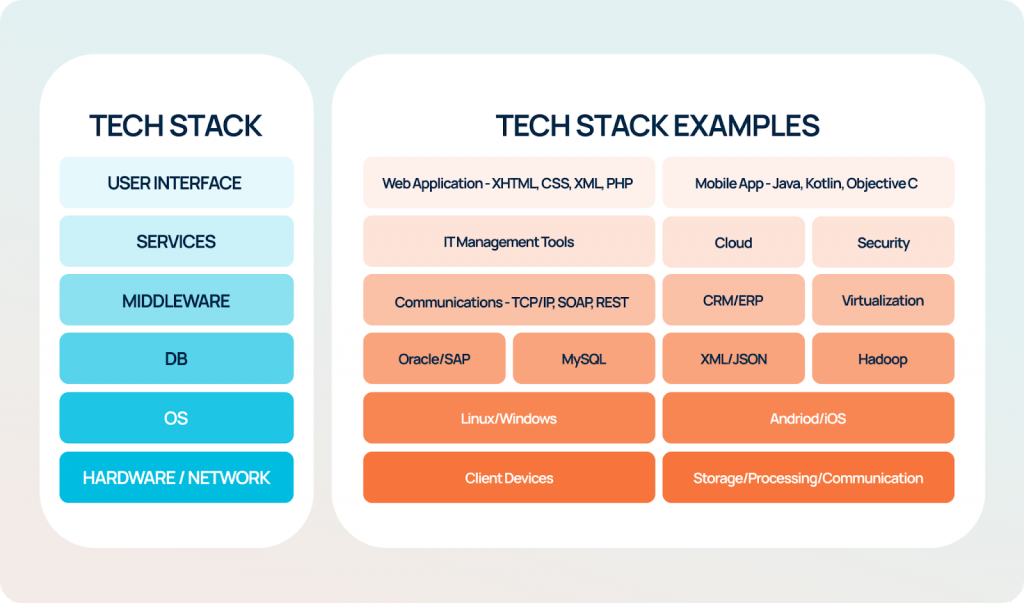
In the fast-paced world of startups, every decision matters. One of the most critical decisions early on is choosing the right tech stack. A tech stack, also known as a technology stack, is the collection of technologies (programming languages, frameworks, databases, tools, etc.) used to build and run an application or system.
The right tech stack can empower a startup to:
- Move quickly: Select tools and technologies that enable rapid development and deployment.
- Scale efficiently: Choose technologies that can handle increasing user loads and data volumes as the business grows.
- Attract talent: Employ popular and in-demand technologies that appeal to skilled developers.
- Minimize costs: Opt for open-source or cost-effective solutions that fit within a startup’s budget.
- Innovate effectively: Leverage cutting-edge technologies to create unique and competitive products.
Key Considerations When Choosing a Tech Stack
Before diving into specific technologies, consider these essential factors:
-
Project Requirements:
- Type of application: Is it a web app, mobile app, e-commerce platform, or something else? Different applications have different needs.
- Features and complexity: What are the core functionalities? How complex is the user interface?
- Scalability: How many users do you anticipate in the short and long term?
- Performance: What are the performance requirements in terms of speed and responsiveness?
-
Team Skills and Experience:
- Existing expertise: What technologies is your team already proficient in?
- Learning curve: How quickly can the team learn new technologies?
- Availability of talent: Is it easy to find developers with expertise in the chosen technologies?
-
Budget:
- Licensing costs: Are there any licensing fees associated with the technologies?
- Hosting costs: How much will it cost to host the application?
- Maintenance costs: What are the ongoing maintenance costs?
-
Time to Market:
- Development speed: How quickly can the application be developed using the chosen technologies?
- Deployment speed: How quickly can the application be deployed?
-
Scalability and Performance:
- Horizontal scaling: Can the application be easily scaled horizontally by adding more servers?
- Database scalability: Can the database handle increasing data volumes?
- Performance optimization: Are there tools and techniques available to optimize performance?
-
Security:
- Security vulnerabilities: Are there any known security vulnerabilities in the technologies?
- Security features: Do the technologies provide built-in security features?
- Security practices: Can the team implement secure coding practices?
-
Community and Ecosystem:
- Community support: Is there a large and active community of users and developers?
- Available libraries and frameworks: Are there pre-built libraries and frameworks that can be used to speed up development?
- Documentation and resources: Is there good documentation and plenty of online resources available?
Popular Tech Stack Components
Here are some of the most popular components of modern startup tech stacks:
-
Frontend (Client-Side):
- JavaScript: The dominant language for web development.
- React: A popular JavaScript library for building user interfaces. Known for its component-based architecture and virtual DOM.
- Angular: A comprehensive JavaScript framework developed by Google. Known for its structure and scalability.
- Vue.js: A progressive JavaScript framework that is easy to learn and use. Known for its flexibility and performance.
- HTML/CSS: The foundation of web pages, providing structure and styling.
-
Backend (Server-Side):
- Node.js: A JavaScript runtime environment that allows you to run JavaScript on the server. Known for its speed and scalability.
- Python: A versatile language with a large ecosystem of libraries and frameworks.
- Django: A high-level Python web framework that encourages rapid development and clean, pragmatic design.
- Flask: A lightweight Python web framework that gives you more control over the components you use.
- Ruby on Rails: A Ruby web framework that emphasizes convention over configuration.
- Java: A robust and scalable language that is often used for enterprise applications.
- Spring: A popular Java framework for building enterprise applications.
- PHP: A widely used language for web development.
- Laravel: A PHP web framework that emphasizes elegant syntax and developer productivity.
-
Databases:
- MySQL: A popular open-source relational database.
- PostgreSQL: A powerful open-source relational database with advanced features.
- MongoDB: A NoSQL document database that is known for its flexibility and scalability.
- Redis: An in-memory data structure store that is often used for caching and session management.
-
Cloud Platforms:
- Amazon Web Services (AWS): A comprehensive suite of cloud services that includes compute, storage, databases, and more.
- Google Cloud Platform (GCP): A set of cloud computing services that includes compute, storage, databases, and machine learning.
- Microsoft Azure: A cloud computing platform that provides a wide range of services.
-
DevOps Tools:
- Git: A distributed version control system that allows teams to collaborate on code.
- Docker: A containerization platform that allows you to package and deploy applications in lightweight containers.
- Kubernetes: A container orchestration platform that automates the deployment, scaling, and management of containerized applications.
- Jenkins: An open-source automation server that is used for continuous integration and continuous delivery (CI/CD).
Example Tech Stacks
Here are a few example tech stacks that are commonly used by startups:
- MEAN Stack: MongoDB, Express.js, Angular, Node.js
- MERN Stack: MongoDB, Express.js, React, Node.js
- LAMP Stack: Linux, Apache, MySQL, PHP
- Python/Django Stack: Python, Django, PostgreSQL
- Ruby on Rails Stack: Ruby, Rails, PostgreSQL
Choosing the Right Tech Stack for Your Startup
There is no one-size-fits-all answer to the question of which tech stack is best for a startup. The right tech stack will depend on the specific needs of the project, the skills of the team, and the budget.
Here are some tips for choosing the right tech stack:
- Start with a clear understanding of your project requirements.
- Consider the skills and experience of your team.
- Think about scalability and performance.
- Don’t be afraid to experiment with different technologies.
- Choose technologies that are well-supported and have a large community.
- Focus on building a Minimum Viable Product (MVP) first and then iterate.
The Importance of Iteration
The tech stack you choose at the beginning may not be the same tech stack you use in the future. As your startup grows and evolves, your needs will change. It’s important to be flexible and willing to adapt your tech stack as necessary.
Conclusion
Choosing the right tech stack is a crucial decision for any startup. By carefully considering the factors discussed in this article, you can build a foundation for success and empower your startup to achieve its goals. Remember to focus on your specific needs, leverage your team’s expertise, and be prepared to iterate and adapt as your business evolves. The right tech stack will enable you to move quickly, scale efficiently, and innovate effectively.