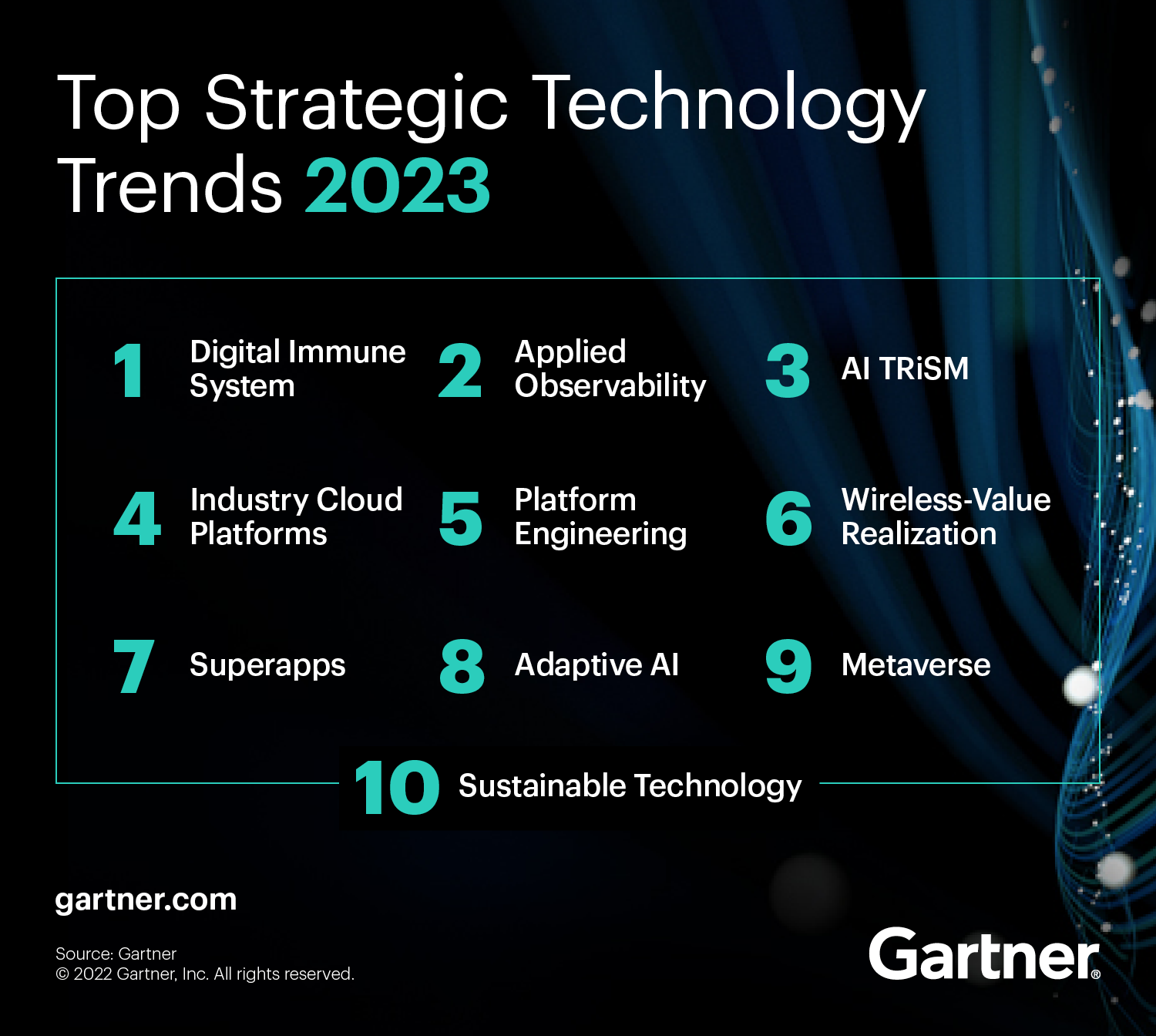
Top Tech Trends Shaping 2025: A Glimpse into the Future
The relentless pace of technological advancement continues to reshape our world, promising a future vastly different from the present. As we approach 2025, several key tech trends are poised to reach critical mass, transforming industries, societies, and our daily lives. This article delves into the most impactful of these trends, exploring their potential, challenges, and implications.
1. The Metaverse: Beyond the Hype, Towards Utility
While initial enthusiasm surrounding the metaverse may have waned, its fundamental principles remain relevant. By 2025, expect to see a shift from purely entertainment-focused metaverse experiences towards more practical applications. Businesses will leverage virtual spaces for training, collaboration, and remote meetings. Retailers will offer immersive shopping experiences, allowing customers to virtually "try on" clothes or visualize furniture in their homes.
Key Developments:
- Improved Interoperability: Different metaverse platforms will become more interconnected, allowing users to seamlessly move between virtual worlds with their avatars and digital assets.
- Enhanced Hardware: Lighter, more comfortable, and more powerful AR/VR headsets will become increasingly accessible, improving the overall user experience.
- Focus on Enterprise Applications: Businesses will drive metaverse adoption by focusing on practical use cases that improve productivity, efficiency, and customer engagement.
Challenges:
- Privacy and Security Concerns: Ensuring data security and user privacy within virtual environments will be crucial.
- Accessibility and Inclusivity: Addressing the digital divide and ensuring equitable access to metaverse technologies for all individuals is essential.
- Regulation and Governance: Clear guidelines and regulations are needed to address issues such as intellectual property, content moderation, and virtual asset ownership.
2. Artificial Intelligence (AI) and Machine Learning (ML): The Rise of Intelligent Automation
AI and ML are no longer futuristic concepts; they are integral components of modern technology. By 2025, we can expect to see even more widespread adoption of AI-powered solutions across various sectors. Intelligent automation will streamline processes, improve decision-making, and enhance customer experiences.
Key Developments:
- Generative AI Explosion: Tools like DALL-E 2 and GPT-3 have already demonstrated the power of generative AI. Expect to see even more sophisticated models capable of creating realistic images, videos, and text on demand.
- AI-Powered Cybersecurity: AI will play an increasingly important role in detecting and preventing cyberattacks, proactively identifying vulnerabilities and responding to threats in real-time.
- AI in Healthcare: AI will assist doctors in diagnosing diseases, personalizing treatment plans, and developing new drugs. AI-powered robots will also assist in surgeries and provide care for elderly patients.
Challenges:
- Bias and Fairness: Addressing biases in AI algorithms and ensuring fair and equitable outcomes for all users is critical.
- Job Displacement: The automation of certain tasks could lead to job losses in some industries. Retraining and upskilling initiatives will be necessary to help workers adapt to the changing job market.
- Ethical Considerations: The ethical implications of AI, such as autonomous weapons and the potential for misuse of AI-generated content, need to be carefully considered.
3. Sustainable Technology: Tech for a Greener Future
With growing concerns about climate change and environmental sustainability, "green tech" is becoming increasingly important. By 2025, expect to see a surge in innovations aimed at reducing carbon emissions, conserving resources, and promoting a circular economy.
Key Developments:
- Renewable Energy Advancements: Solar, wind, and other renewable energy sources will become more efficient and affordable, making them increasingly competitive with fossil fuels.
- Electric Vehicle (EV) Revolution: EVs will become more mainstream, with longer driving ranges, faster charging times, and lower prices. The development of robust charging infrastructure will be crucial for widespread adoption.
- Smart Grids: Intelligent grids will optimize energy distribution, reduce waste, and integrate renewable energy sources more efficiently.
Challenges:
- Infrastructure Development: Building the necessary infrastructure to support sustainable technologies, such as EV charging stations and smart grids, will require significant investment.
- Material Sourcing and Recycling: Ensuring the sustainable sourcing of materials used in green technologies and developing effective recycling programs is essential.
- Policy and Regulation: Government policies and regulations will play a crucial role in incentivizing the adoption of sustainable technologies and promoting a green economy.
4. Quantum Computing: A Paradigm Shift in Processing Power
Quantum computing is still in its early stages of development, but it has the potential to revolutionize industries that rely on complex calculations, such as drug discovery, materials science, and financial modeling. By 2025, we can expect to see more practical applications of quantum computing emerge.
Key Developments:
- Improved Quantum Hardware: Quantum computers will become more stable, reliable, and scalable, allowing them to tackle more complex problems.
- Quantum Software Development: New software tools and programming languages will make it easier for developers to write quantum algorithms.
- Early Adoption in Specific Industries: Quantum computing will likely find early adoption in industries where it can provide a significant competitive advantage, such as drug discovery and financial risk management.
Challenges:
- Hardware Stability and Scalability: Building stable and scalable quantum computers is a significant technical challenge.
- Quantum Algorithm Development: Developing quantum algorithms that can outperform classical algorithms for practical problems is a complex task.
- Talent Shortage: There is a shortage of skilled quantum computing professionals.
5. Advanced Connectivity: 5G, 6G, and Beyond
Faster and more reliable connectivity is essential for supporting the growing demand for data-intensive applications, such as streaming video, online gaming, and the Internet of Things (IoT). By 2025, 5G networks will be widely deployed, and research into 6G technology will be well underway.
Key Developments:
- 5G Expansion: 5G networks will expand to more cities and rural areas, providing faster download speeds, lower latency, and greater network capacity.
- Wi-Fi 6E Adoption: Wi-Fi 6E will offer faster speeds and lower latency than previous Wi-Fi standards, improving the performance of wireless devices in homes and offices.
- 6G Research and Development: Research into 6G technology will focus on developing even faster and more reliable wireless networks that can support new applications such as holographic communication and advanced robotics.
Challenges:
- Infrastructure Deployment Costs: Deploying 5G and 6G networks requires significant investment in infrastructure.
- Spectrum Availability: Securing sufficient spectrum for 5G and 6G networks is a challenge in many countries.
- Security Concerns: Ensuring the security of 5G and 6G networks is critical, as these networks will be used to transmit sensitive data.
6. Biotech Revolution: Personalized Medicine and Beyond
Biotechnology is rapidly advancing, offering new possibilities for diagnosing, treating, and preventing diseases. By 2025, we can expect to see more personalized medicine approaches, gene editing technologies, and advanced diagnostics.
Key Developments:
- CRISPR Gene Editing: CRISPR technology will be used to develop new therapies for genetic diseases and cancer.
- Personalized Medicine: Doctors will use a patient’s genetic information to tailor treatment plans to their specific needs.
- AI-Powered Drug Discovery: AI will accelerate the drug discovery process, helping researchers identify promising drug candidates more quickly.
Challenges:
- Ethical Concerns: Gene editing raises ethical concerns about the potential for unintended consequences and the alteration of the human germline.
- Accessibility and Affordability: Ensuring that new biotech therapies are accessible and affordable to all patients is a major challenge.
- Regulation and Oversight: Clear regulations and oversight are needed to ensure the safe and ethical development and use of biotechnology.
Conclusion:
The tech trends outlined above represent a glimpse into the future of 2025 and beyond. These technologies have the potential to transform our world in profound ways, improving our lives, solving global challenges, and creating new opportunities. However, it is important to address the challenges associated with these technologies, such as ethical concerns, security risks, and the potential for job displacement. By carefully considering the implications of these trends and working to mitigate the risks, we can harness the power of technology to create a better future for all. The next few years will be a period of rapid innovation and transformation, and it is crucial to stay informed and adapt to the changing landscape.